Professor Sir David Clary
SC D, FRS
(Chemistry, m.1974)
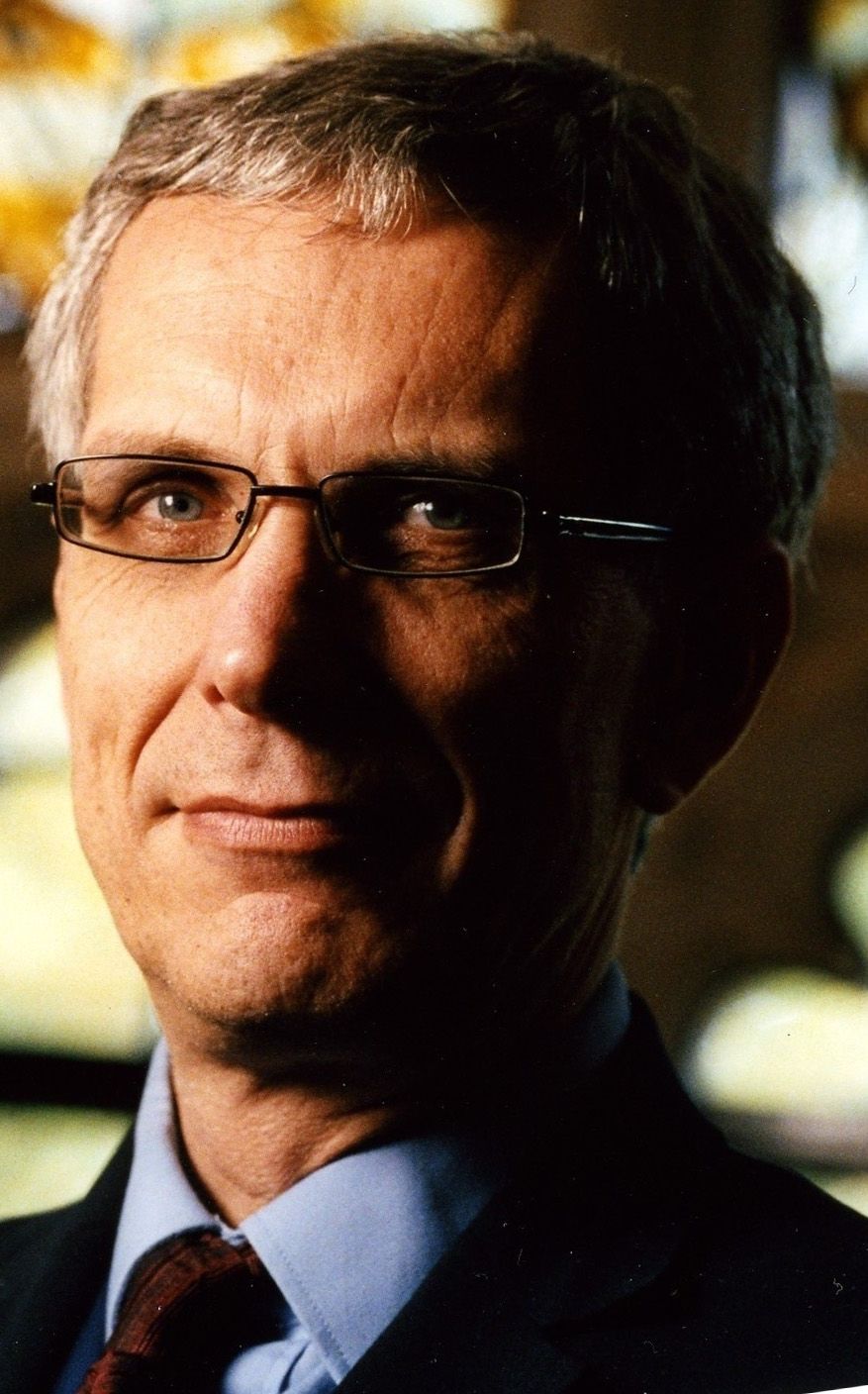

About Sir David Clary
In September 2025, Sir David Clary returned to Corpus to deliver a lecture for the University of Cambridge Alumni Festival. The subject of talk was The Lost Scientists of World War II, and it was based on one of three books that David has published in the last few years. Becoming an author of the history of science is just the latest accomplishment in an extraordinary career that has spanned research, teaching, academic leadership and serving as a scientific advisor to the Government.
David came to Corpus to do his PhD after getting a BSc from the University of Sussex. He says, "Sussex had a really excellent chemistry department. Three of my tutors won Nobel Prizes. I did a research project with Harry Kroto who essentially invented the field of nanotechnology." David was also taught by Professor John Murrell (m.1954), who himself had been a graduate student of Corpus Fellow, Professor Christopher Longuet-Higgins, the first Warden of Leckhampton.
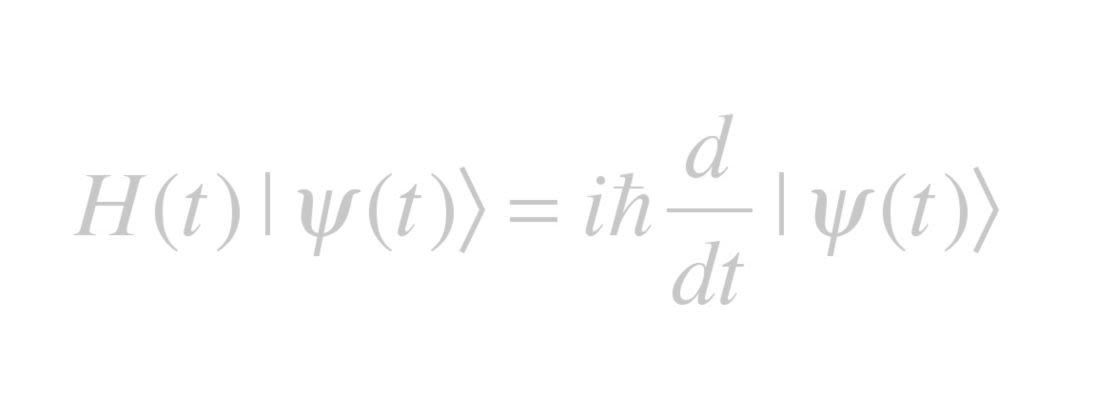
"There was a background of people in theoretical chemistry associated with Corpus and Leckhampton, which was the pioneering graduate centre in Cambridge and Oxford. I came to Corpus because of Leckhampton. It was clear that Corpus looked after its graduate students probably better than any other college." It was whilst doing his graduate work at Corpus that David first developed an interest in the famous equation of the physicist Erwin Schrödinger, which went on to become central to David's research career.
After graduating, David was given a postdoc position at IBM in San Jose, California. He says, "At that time IBM had started to develop their mainframe computers and they wanted to show they would be useful in chemistry." The position lasted a year and then David returned to the UK and spent a further three years in Manchester as a lecturer before returning to Cambridge to a lectureship in theoretical chemistry and a Fellowship at Magdalene College Cambridge. In 1996 he moved to University College London, and then in 2002 to Oxford where became President of Magdalen College in 2005, the college where Erwin Schrödinger had been a Fellow and where he had learned – in the President's office subsequently occupied by David – in 1933 that he had been awarded the Nobel Prize in Physics.
During David's time as President of Magdalen, the new role of chief scientific advisor to the Foreign and Commonwealth Office (FCO) was created by then-prime minister Gordon Brown to "bring science to international policy making and diplomacy". David took on the role and collaborated with the UK Science and Innovation Network, whose work aims to enhance international relations through scientific collaborations between the UK and other nations. His work with the FCO saw him visit 18 countries, as well as British Overseas Territories including a British base in Antarctica. This work, along with his research and his Presidency of Magdalen, were cited when he was knighted in 2016.

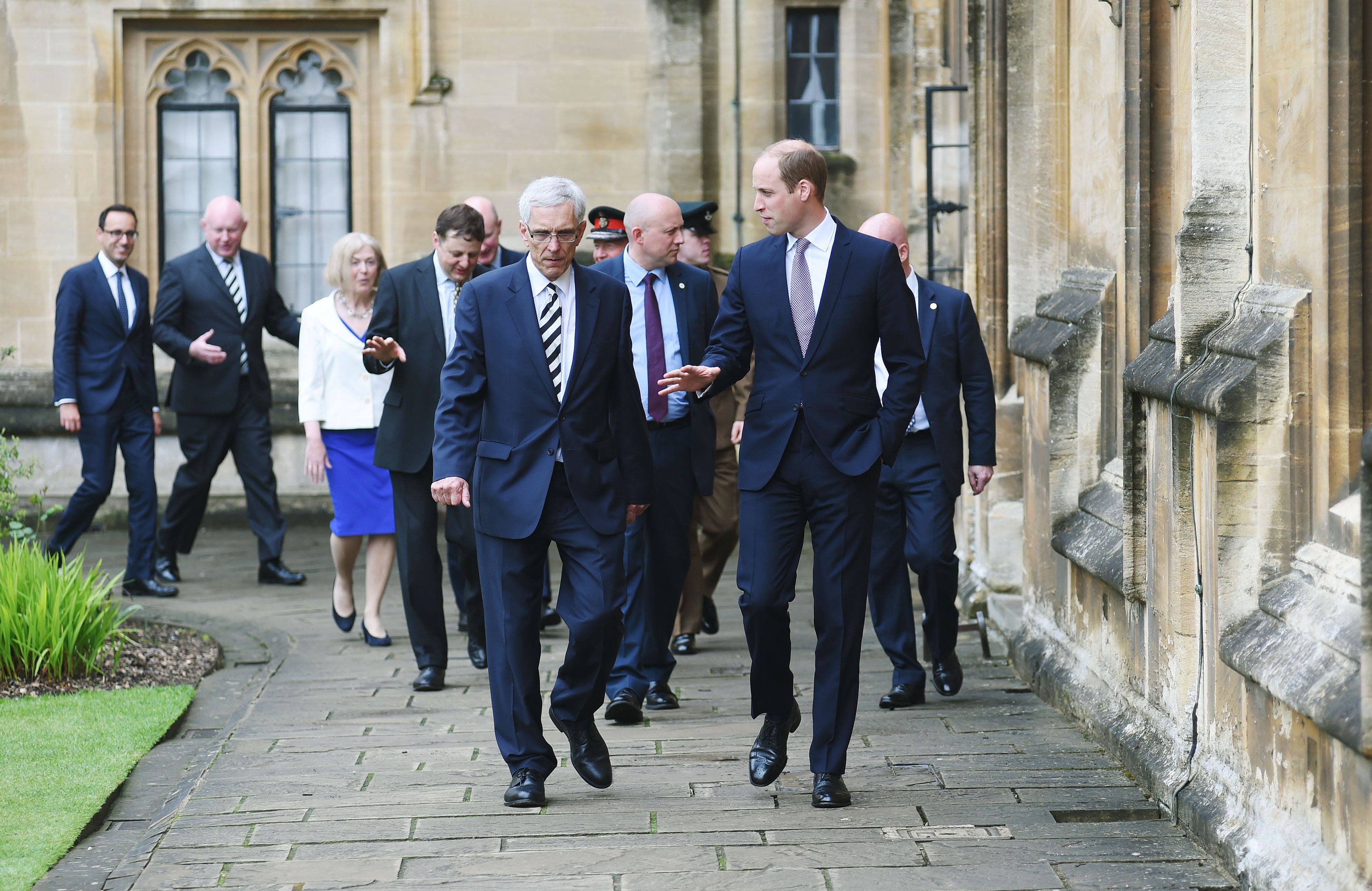
As President of Magdalen College Oxford, hosting the Prince of Wales.
As President of Magdalen College Oxford, hosting the Prince of Wales.

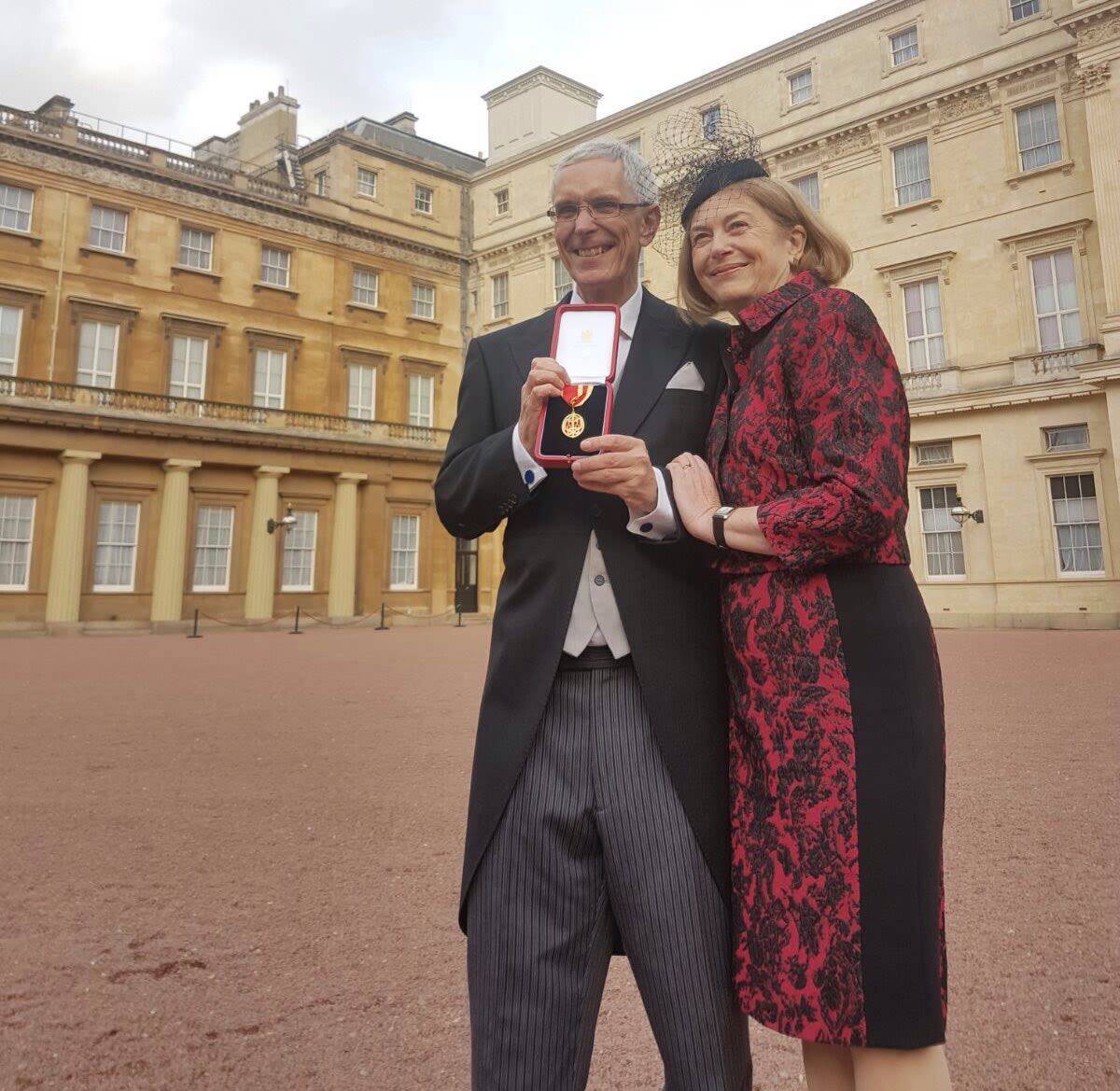
At Buckingham Palace with his wife Heather after receiving his knighthood in the Queen's 2016 Birthday Honours. The citation read, Professor Clary has made an outstanding contribution to enhancing the international reputation of UK science and higher education. Through his leadership, he has enhanced Magdalen College’s position as one of the leading academic institutions in the world. In his own scientific research he developed new theories for calculating the rates of chemical reactions. As Head of the Division of Mathematical and Physical Sciences at Oxford University he facilitated links between physical, life and medical sciences, helping to raise Oxford's profile as a leader for scientific research and innovation. As the first FCO Chief Scientific Adviser he enhanced significantly the visibility of UK science and innovation overseas, being a major proponent of using scientific collaborations to enhance international relations.
At Buckingham Palace with his wife Heather after receiving his knighthood in the Queen's 2016 Birthday Honours. The citation read, Professor Clary has made an outstanding contribution to enhancing the international reputation of UK science and higher education. Through his leadership, he has enhanced Magdalen College’s position as one of the leading academic institutions in the world. In his own scientific research he developed new theories for calculating the rates of chemical reactions. As Head of the Division of Mathematical and Physical Sciences at Oxford University he facilitated links between physical, life and medical sciences, helping to raise Oxford's profile as a leader for scientific research and innovation. As the first FCO Chief Scientific Adviser he enhanced significantly the visibility of UK science and innovation overseas, being a major proponent of using scientific collaborations to enhance international relations.

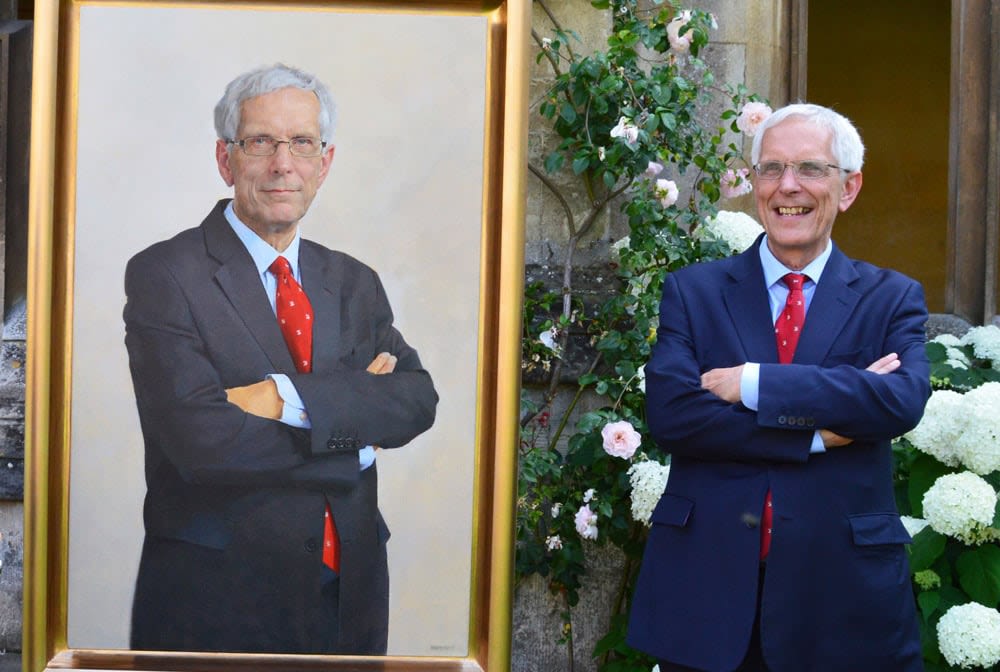
With his portrait at Magdalen College, Oxford.
With his portrait at Magdalen College, Oxford.
Schrödinger and quantum chemistry
Erwin Schrödinger's 1926 equation is fundamental to the field of quantum mechanics. Originally developed to describe the hydrogen atom, solutions to the equation predict the motion of small particles and the probability of events or outcome. The equation is used extensively in nearly all branches of physics - atomic, nuclear and solid-state - and increasingly in both chemistry and biology.
In his research, David Clary uses Schrödinger's equation as the foundation on the quantum theory of chemical reactions. The equation is very difficult to solve for molecules with many atoms. When computers were developed it became possible to use them to solve the equation for increasingly complicated systems.
David's breakthrough was to develop computational methodology to predict and explain how these systems and molecules interact, react, and transfer energy, especially in cases that are too complex or dangerous for experiments. This approach has allowed him to model chemical processes under extreme conditions, such as high temperatures, and is widely applicable in atmospheric, interstellar and combustion chemistry. A key area of his research is 'quantum tunnelling' in reactions; the equation helps to quantify the probability that particles will 'tunnel' through energy barriers. This enables understanding reactions at low temperatures or those involving lighter particles.
David says, "Increasingly people are using the equation in more and more complex situations. It's even applicable in drug discovery where you have a small molecule that attaches itself to a biological target molecule and you can calculate the energy of attachment using this method of quantum chemistry." Another area of application is in the case of new materials. "With these methods you can predict very new materials that nobody has thought of before, going through the periodic table and combining elements in arbitrary way to find materials with new properties. This can be very useful for batteries and superconductors. So this methodology underlies so much of modern physical science and also biology. For example, Martin Karplus received the Nobel prize for being able to simulate proteins, so if one can do that and on even more complicated biological systems using these quantum methods you can help the whole field of biochemistry, molecular biology and eventually medicine."

From molecules to manuscripts
2020 saw David retire from his positions in Oxford, although that may not be the most apt word for someone who is currently a Director of Studies in Chemistry and Honorary Fellow at Magdalene College Cambridge, Editor of Chemical Physics Impact, doting grandfather and avid supporter of Ipswich Town Football Club. He has also written a triology of history of science books in the last three years – first by turning his expertise on Schrödinger's life and work into a biography, and in so doing discovering further tales of scientists in exile during the perilous period of the rise of Nazi Germany and the Second World War.
David says, "I was always interested in history and because of my scientific work I was also very interested in Schrödinger. I had accumulated a lot of archival material of his time in Oxford, at Magdalen, and in the subsequent years when he returned to Austria, only to flee once again as the Nazis rose to power." David travelled to Austria to meet Schrödinger's daughter, Ruth March Braunizer, who provided him with valuable archival papers which helped him to write his first book, Schrödinger in Oxford (World Scientific Publishing, 2022). The biography is largely non-technical and follows the physicist as he moves around Europe and develops an international life of science with such contemporaries as Albert Einstein, Max Born, Max Planck, and Paul Dirac – the latter with whom he shared his Nobel prize "for the discovery of new productive forms of atomic theory".

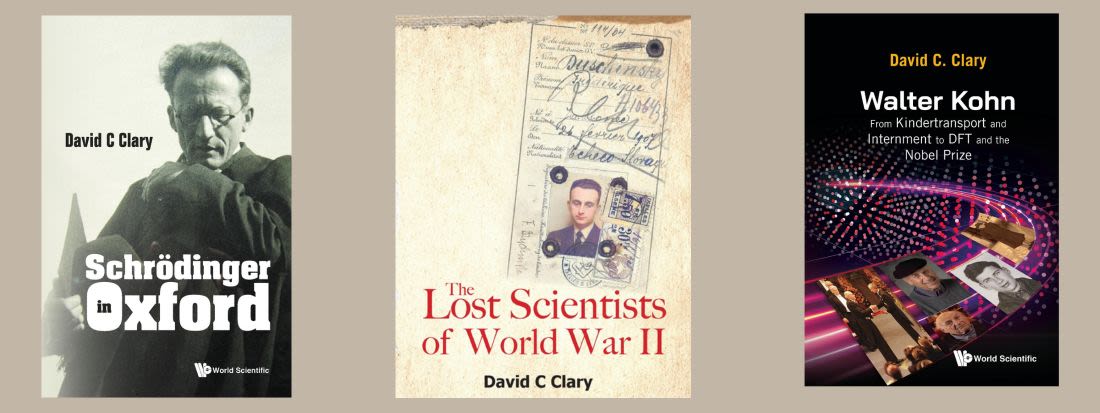
Whilst researching his first book, David found that many of Schrödinger's associates scattered and disappeared during the war. This led to a second book, The Lost Scientists of World War II (World Scientific Publishing, 2024). And then the third book came. "The first guest to visit me at Magdalen when I became President was the physicist Walter Kohn, who had come up with a very efficient new way of solving the Schrödinger equation that is widely used today. He had become the most highly cited physicist in the world and he came to see me because he was from Vienna, like Schrödinger, and they both escaped from Austria in the late 1930s –Kohn as a teenager on the Kindertransport, Schrödinger to Italy." David realised that nobody had written a biography of Kohn, who received the Nobel prize in Chemistry in 1998, a situation David rectified with the publication of his third book, Walter Kohn: from Kindertransport and Internment to DFT and the Nobel Prize (World Scientific Publishing, 2024.)
 Built with Shorthand